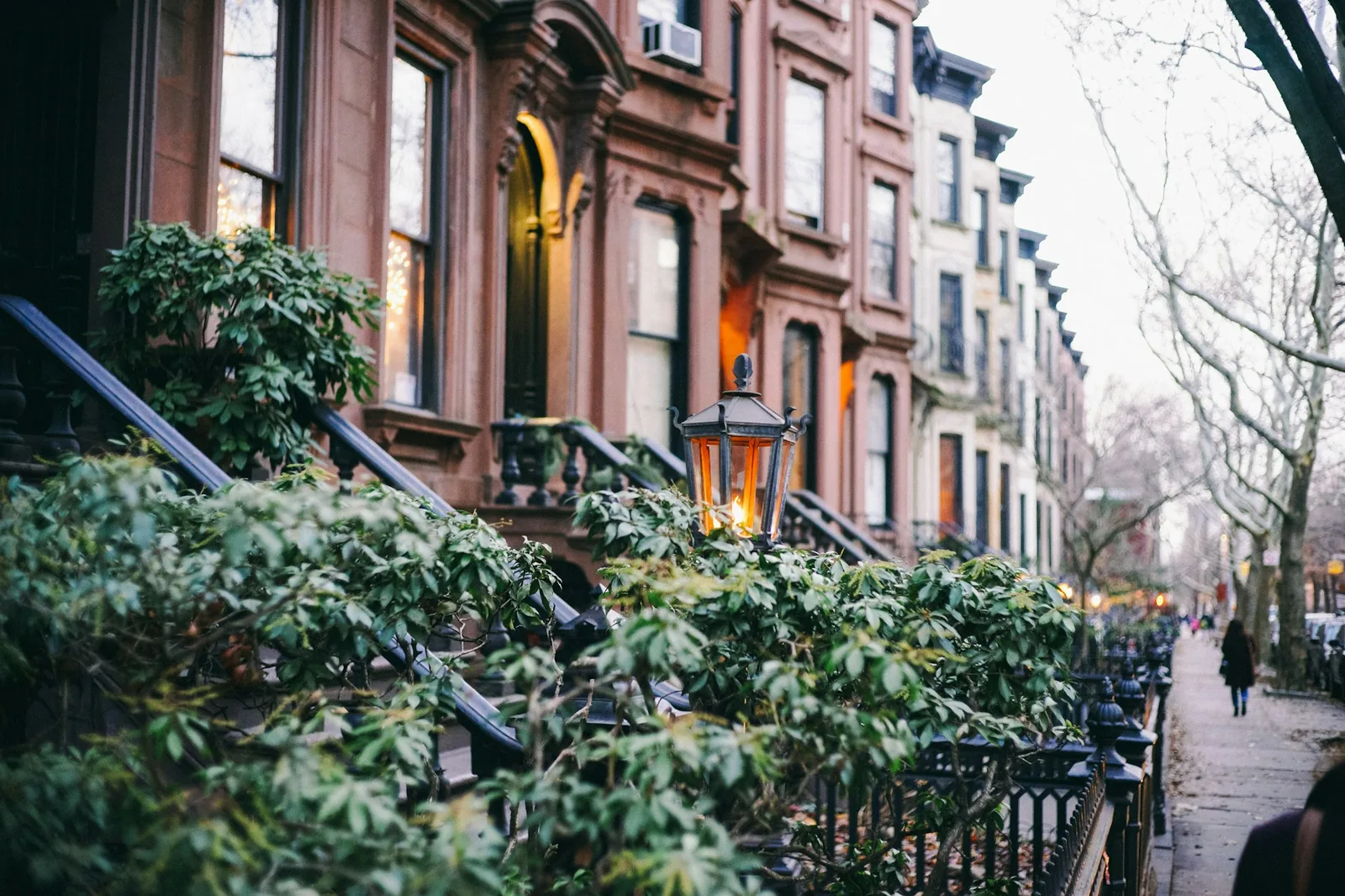
Brooklyn has the most varied housing stock of any borough, which means very little of what works in one property transfers to the next.
The housing stock
Brownstones with high parlor floors, original moldings and rooms that run front to back. Garden apartments where the light comes from one end. Converted warehouses with volume, hard surfaces and almost no walls to work with. Newer condo stock with none of those problems and none of that character.
What each one needs
- Brownstones — respect the original detail and do not fight the proportions. The parlor floor is the room that sells the house.
- Garden apartments — everything is about pulling light down the length of the space.
- Lofts — the job is defining zones without building anything. Rugs and furniture backs do the work walls would.
- Stoops and narrow hallways decide delivery routes more often than the front door does.
Sound and surface
Converted industrial spaces photograph well and live loudly. Soft furnishings are doing acoustic work as much as visual work, and a loft with no textiles in it reads as unfinished on camera for the same reason it echoes in person.
Common questions
Do you stage the garden or the stoop?
Where it matters to the listing. On a brownstone the approach is the first photograph a buyer sees, and an empty stoop is a wasted one.
Can you work with original features?
Gladly. Moldings, mantels and original floors are the reason someone is buying the property — the styling should point at them, not compete.